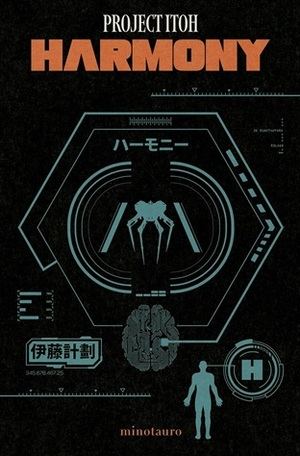
“Sé que la sociedad podrá existir sin delitos, sin pobreza, con una condición sanitaria mejor, sin ser infeliz o estar afligida por penas, y con una felicidad quintuplicada; y que ningún obstáculo, aparte de la ignorancia, se opone a ello en la actualidad, ni impide que tal estado social se convierta en universal”. Estas son algunas de las palabras de Robert Owen en The revolution in the Mind and Practice of the Human Race (1849), fundador de New Harmony en 1825, un pueblicito en el sur de Indiana (con capital en Indianápolis) donde trató de trasladar sus ideas de socialismo utópico, desde su doctrina de la fraternidad humana y el cooperativismo. Sus ideas fracasaron.
This piebald comparative inquiry is the kernel of two experiences with two wenches. As I was gallivanting across a rut of kennels of a street of New York, I saw a hairlanked black woman, and I wooed her by using my most poetical and knightly resources and polite letters. Amid that hectic cityscape she accepted my words, which at that moment were only an echo of a line of a poem written by Lord Byron: “She walks in beauty, like the night” (1). She smiled, and we are good records of love now. I did the same thing in Mexico with another coloured lass. Decorum does not permit me to describe her barbarian reaction.
M.A.R. Editor
En El taxista asesino encontramos el mundo como representación; nada es real, todo es falso, recreación de un decorado, un montaje para entretenernos. El ser humano es esclavo de su deseo, de la voluntad ciega de vivir. Para los personajes la vida es un anhelo y un tormento; en algunos textos el drama se analiza desde el humor, y en otros desde la introspección. Las dos pulsiones dominantes en esta obra son el amor y el odio; de su equilibrio nace eso que llamamos sociedad.
|
If metaphysics is the morningtide of art, and if the whilom is arrayed by the minion ideas of soul (“Seele”), world (“Welt”) and God (“Gott”), and if these flapping cloddish concepts are the tokens of the three main cravings of the human mind, videlicet, the setting of strong adjectives, the hoisting of stout hypotheses, and the blurbing of cosmogonies and apocalypses, then artists are those who can depict objects by means of an original garb, arrange them in an unmovable manner, and homogenizing them without lacking of accurateness. An artist is, ere all, one indued with the wit to beget a new sleight, to contrive hallowed dispositions, and to harmonize sundry objects within a tale.
Henry Louis Mencken was a penetrating writer, who represented the crux of the journalism of America. Then, a philosophical analysis of his work will be useful to understand that journalism. To do this, I have perused A Gang of Pecksniffs[1], which is a compendium of texts engaged against the hypocrisy of mediocre newspapermen. Our point d’appui could be this simple Kantian sentence: we can not know things in an objective manner. Our necessary representations a priori, like geometry and arithmetic, give a form and an order to the various data coming from the exterior world.
[1] Mencken, Henry Louis, A Gang of Pecksniffs. New Rochelle, New York: Arlington House-Publishers, 1955.
Se estrena el viernes día 14 de agosto
Mosaico de estados de ánimo de un ser humano
Distribuida por A Contracorriente Film se estrena el viernes día 14 de agosto “Señor Manglehorn”, dirigida por David Gordon Green, mosaico de estados de ánimo de un ser humano. A.J. Manglehorn es un ex convicto que, 40 años atrás, renunció a la mujer de sus sueños a cambio de dar un gran golpe. Ahora reside de manera humilde y discreta en una pequeña localidad, viendo pasar los días en soledad. Hasta que su pasado sale a la luz sorprendiendo a sus vecinos.
|